
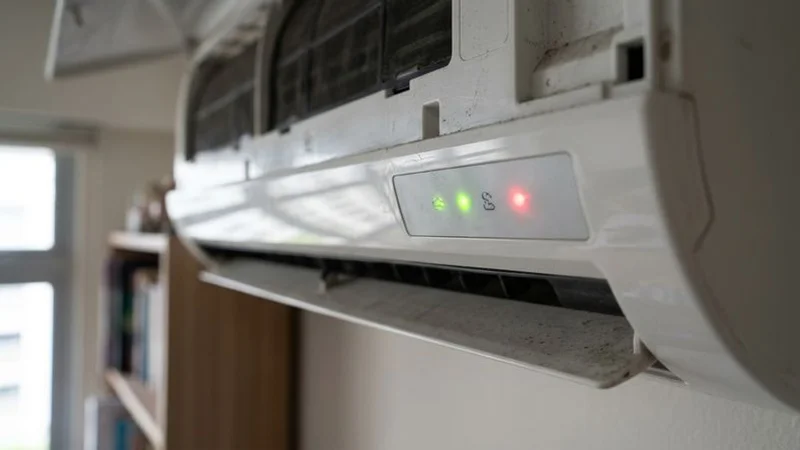
We understand the immediate frustration of walking into a sweltering room only to find your cooling unit flashing a warning. That rhythmic flashing is actually a highly specific diagnostic tool trying to tell you exactly what went wrong. Since our founder Brian started Cool Earth Aircon Services in 2007, providing professional aircon servicing in Singapore, we have diagnosed thousands of these exact warning signals across HDB flats and commercial spaces.
Finding a solution to an Aircon Blinking Light: What It Means and How to Fix It is easier once you decode the pattern.
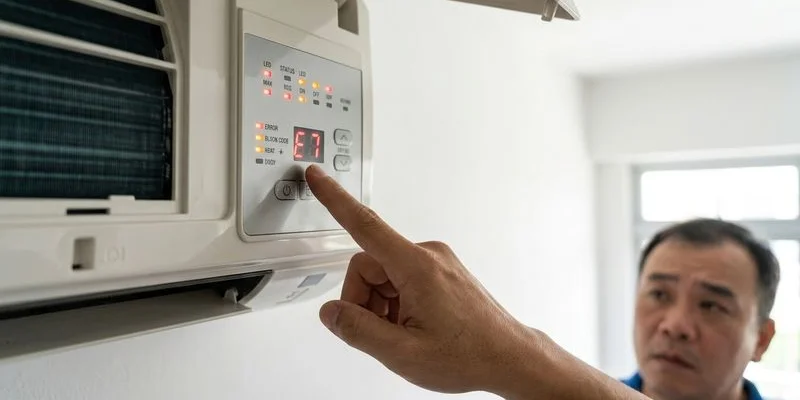
Our technicians rely on these built-in error codes to pinpoint problems before we even open the casing. The system uses these patterns to warn you about everything from a clogged filter to a failing compressor. Let us look at the data, what the specific flashes mean for major brands, and explore a few practical ways to respond before calling for backup.
Why Aircon Lights Blink
Every modern air conditioner relies on a Printed Circuit Board (PCB) to act as its central brain. We regularly show clients how this board continuously monitors temperature readings, fan speeds, and refrigerant pressures up to twenty times per second. If a sensor detects an abnormality, the PCB immediately triggers a safety protocol to prevent further damage.
This safety mechanism usually cuts the power to the compressor and activates the warning display. Our teams see this most often when a unit is pushed beyond its normal operating limits during Singapore’s hottest months. The system then displays an error code through one of three primary methods.
- Blinking indicator patterns: The LED flashes a specific number of times, pauses, and then repeats the cycle.
- Alphanumeric error codes: A digital screen directly displays a combination of letters and numbers.
- Audible diagnostic beeps: The unit emits specific chime patterns alongside the flashing LEDs.
Common Blinking Light Meanings by Brand
Every manufacturer designs their PCBs with a unique proprietary diagnostic language. We keep updated factory manuals for all major units because a three-blink code means entirely different things depending on the badge on the plastic casing. Here are the most common error sequences our technicians encounter across Singapore.
Daikin
Daikin units are excellent at self-diagnosing, and they display their findings right on the indoor LED panel. Our standard procedure is to check the remote control to extract the exact alphanumeric fault. You can do this yourself by holding the “Cancel” or “On/Off” button on your Daikin remote for five seconds until “00” appears on the screen.
Press the button repeatedly after that until you hear a long, continuous beep. The code displayed on the remote at that exact moment is your specific fault identifier. We always remind owners of multi-split systems to check every single indoor unit.
A compressor issue might cause all three room units to blink, but unit A might show a U4 communication error while unit B displays an A5 freeze-up warning. This specific detail saves hours of diagnostic time.
| Code | Meaning | Severity & Action |
|---|---|---|
| E0 | Safety device activated | Medium: Often a temporary power surge. |
| E3 | High-pressure protection activated | High: Usually indicates a severe blockage. |
| E7 | Fan motor malfunction | High: Requires a motor replacement. |
| F3 | Discharge pipe temperature too high | Medium: Check for blocked outdoor airflow. |
| U0 | Low refrigerant or gas shortage | High: System needs a professional leak test. |
| U4 | Communication error | Medium: Wires between indoor and outdoor units are compromised. |
A slow, continuous green flash is perfectly normal and simply means the system is in standby mode. We tell clients to only worry if the green light flashes rapidly (more than three times per second) and is accompanied by a beeping sound.
Mitsubishi Electric
Mitsubishi Starmex models communicate their distress by flashing the operation timer LED. Our repair logs show that counting the exact number of flashes before the 2.5-second pause is the key to solving the puzzle.
| Pattern | Meaning |
|---|---|
| 2 blinks | Thermistor (temperature sensor) or Louver fault |
| 5 blinks | Outdoor power system or Inverter PCB error |
| 6 blinks | Outdoor unit thermistor error |
| 7 blinks | Indoor fan motor failure |
| Rapid blinking | Main power supply failure |
A two-blink sequence is the most frequent callout we receive for Starmex units. Before calling a technician, check the bottom louver clasp on your wall unit. Mitsubishi built in a safety switch, and if that clasp is not firmly snapped shut after a routine cleaning, the unit will blink twice and refuse to run.
We must also warn you about the dreaded five-blink sequence. This indicates a major fault with the outdoor condenser unit’s inverter PCB. A replacement board often exceeds S$700, so if your unit is out of its warranty period, investing in a completely new air conditioner is usually the smarter financial choice.
Panasonic
Panasonic systems are incredibly reliable, but they rely heavily on seamless communication between the indoor and outdoor units. Our team constantly deals with the infamous H11 error code across older housing estates. This specific fault means the indoor unit can no longer speak to the outdoor condenser, usually because Singapore’s high humidity has corroded the connecting electrical wires.
| Code | Meaning |
|---|---|
| H00 | No abnormality (self-check passed) |
| H11 | Indoor-outdoor communication failure |
| H14 | Indoor intake air sensor anomaly |
| H15 | Compressor temperature sensor fault |
| F91 | Refrigerant cycle abnormality (Gas leak) |
| F99 | DC peak current error (Electrical overload) |
If your Panasonic timer light is flashing but you do not have a digital screen, grab a paperclip. We instruct clients to press the recessed “Check” button on the bottom of their remote control for five seconds. Once the screen goes blank, use the up and down arrows to scroll through the codes until the indoor unit emits four rapid beeps.
That final beep confirms the exact code causing your system to fail.
Samsung and LG
Both Samsung and LG have transitioned to highly digital diagnostic platforms. Our younger clients appreciate that these modern units often display exact alphanumeric codes (like E101 for Samsung or CH05 for LG) directly on the sleek front panels. If your specific model lacks a screen, you can usually download the manufacturer’s smartphone application.
These apps use your phone’s microphone to listen to a specific audio tone emitted by the air conditioner. We find this smart diagnosis feature incredibly accurate for instantly identifying faulty thermistors or power relays.
Aircon Blinking Light: What It Means and How to Fix It at Home
Seeing a warning signal does not automatically mean you need an expensive repair bill. We always recommend performing a few basic checks before scheduling a service visit.
Step 1: Switch Off and Wait
Turning off the unit with your remote control is never enough to clear a motherboard error. Our first instruction over the phone is always to locate the main aircon isolator switch, which is usually a large white switch mounted on the wall next to the unit. Turn this switch completely off and leave it alone for at least 20 minutes.
This extended wait time allows the internal capacitors on the PCB to completely discharge. We find that this hard power reset clears out transient power fluctuations and minor software glitches about thirty percent of the time.
Step 2: Check the Filters
A thick layer of dust restricts cold air from leaving the unit. Our maintenance crews see this daily: the trapped cold air causes the internal coil temperature to plummet, which eventually triggers a freeze-up protection error. Pop the front cover open, wash the mesh screens with lukewarm water, and let them dry completely before reinstalling them.
Step 3: Check the Outdoor Unit
The outdoor compressor needs massive amounts of airflow to dissipate heat. We frequently trace high-temperature error codes back to simple obstructions like stray plastic bags, stacked cardboard boxes, or overgrown plants blocking the condenser fan. If you live in an HDB flat, please prioritise your safety and never lean out over the aircon ledge to inspect the unit.
Simply look through the window to see if the large fan blade is spinning. If the indoor unit is blowing warm air but the outdoor fan is completely stationary, you likely have a tripped breaker or a blown motor capacitor.
Step 4: Record the Error Code
Taking a quick video of the flashing sequence is the most helpful thing you can do for your repair team. Our technicians can often source the exact replacement parts needed before leaving the warehouse if they see the blink pattern beforehand. Note the colour of the light, count the flashes, and record whether the system still blows air or is completely dead.
When to Call a Professional
Some symptoms require immediate technical intervention to prevent serious property damage or electrical fires. We urge you to turn off the main power immediately if you experience any of the following critical warning signs.
Critical Warning Signs
- Acrid burning smells: An odour of melting plastic usually means the PCB or fan motor is actively short-circuiting.
- Constant breaker tripping: If resetting the unit causes your main household circuit breaker to trip, you have a severe electrical grounding issue.
- Rapid short cycling: The compressor violently turning on and off every sixty seconds will quickly destroy the motor bearings.
- Active water leaks: Water dripping directly over internal electrical components is a major shock hazard.
Non-Urgent Service Indicators
- The warning sequence returns every few weeks despite regular hard resets.
- The system blows cold air, but the outdoor unit makes loud grinding or squealing noises.
- Multiple indoor units in different rooms display identical warning codes simultaneously.
The Cost of Ignoring Blinking Lights
Running a unit while it actively displays a warning is a guaranteed way to multiply your repair costs. Our financial data shows that ignoring a minor alert almost always leads to a catastrophic component failure. A low refrigerant warning, like the Daikin U0 code, means the compressor is starved of the cooling gas it needs to prevent overheating. Learn to spot the signs your aircon is low on gas before it escalates.
Forcing a starved system to run will eventually fuse the compressor valves. We regularly see homeowners turn a routine S$100 gas top-up into an S$800 complete compressor replacement purely out of stubbornness. Similarly, ignoring an intermittent communication error allows loose, sparking wires to slowly melt the surrounding plastic casing.
Do not gamble with your expensive cooling appliances. The standard diagnostic fee in Singapore typically ranges from S$30 to S$50. This small investment in a professional assessment is insignificant compared to the cost of replacing an entirely ruined system.
As a final rule of thumb, always treat a persistent flashing light as a strict stop-work order for your cooling system. We have spent the last 18 years helping Singaporeans avoid massive repair bills through early intervention. If your unit is not blowing cold air, a professional diagnosis can identify the exact cause. Understanding your Aircon Blinking Light: What It Means and How to Fix It is the first step in protecting your investment. If your aircon is showing a blinking light or error code that you cannot resolve, contact us for a same-day diagnostic. Our experienced teams will get your space cooled down quickly and safely.

About the Author
Brian
Founder & Lead Technician
Brian founded Cool Earth Aircon in 2007 after completing his technical apprenticeship. With 18 years of hands-on experience servicing aircon systems across Singapore, he leads a team of certified technicians committed to transparent, quality work.