
We founded Cool Earth Aircon Services back in 2007 to fix the frustrating gaps in local maintenance.
Excellent cooling systems frequently degrade prematurely simply because of neglected daily upkeep, making regular aircon servicing in Singapore essential. That deterioration is frustrating, especially since the gap between professional visits is where the real wear happens.
Homeowners who take an active role between visits always enjoy better performance.
Our technicians have noticed that a few simple habits make a massive difference. These DIY aircon maintenance tips for Singapore homeowners require no special tools or technical knowledge. Let’s look at the data, what it actually means for your system, and explore practical ways to respond.
1. Clean Your Filters Every Two Weeks (Top DIY Aircon Maintenance Tips for Singapore Homeowners)
We recommend making this your top priority, as it takes less than 10 minutes. Dirty filters are the primary cause of reduced cooling and musty odours.
The National Environment Agency (NEA) notes that a dirty filter forces your unit to consume significantly more electricity. Our data shows that cleaning a clogged mesh filter can restore airflow by up to 50%.
| Metric | Clean Filter | Clogged Filter |
|---|---|---|
| Airflow Capacity | 100% | Under 50% |
| Electricity Usage | Normal | 15% Higher |
| Cooling Speed | Fast | Very Slow |
Follow these simple steps:
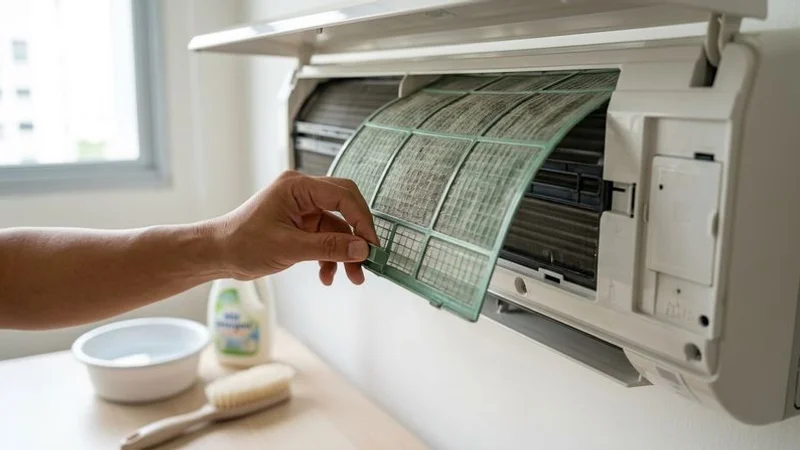
- Switch off the aircon unit and wait a minute.
- Open the front panel of your indoor unit (it lifts up with a gentle pull).
- Slide out the mesh filters.
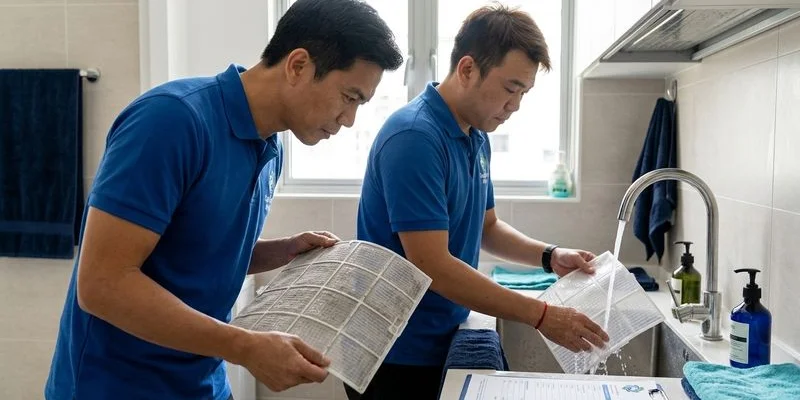
- Rinse them under lukewarm running water, using a soft brush like an old toothbrush with mild dish soap for stubborn grime.
- Shake off excess water and let them air dry completely.
- Slide the dry filters back into place and close the panel.
We always warn customers against reinserting wet filters, as the dampness encourages Aspergillus mould growth. This specific mould thrives in Singapore’s humid climate. Pet owners should consider checking their filters weekly to capture fine fur and dander before it causes severe blockages.
2. Keep the Outdoor Unit Clear
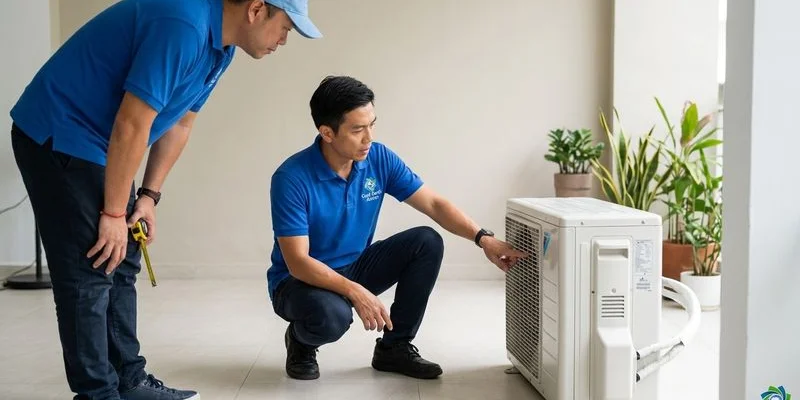
Our team frequently encounters condenser units that have been completely forgotten by homeowners. This external box needs adequate airflow to dissipate heat effectively.
Many people neglect this unit simply because it sits out of sight on an HDB ledge or condo balcony.
Safety and Maintenance Rules
The Building and Construction Authority (BCA) enforces strict rules regarding these exterior units. Flat owners face a penalty of up to $5,000 for improper installation or a severe lack of maintenance that compromises safety.
Check the following regularly:
- Clear any debris: Remove leaves, plastic bags, or Javan Mynah bird nests from around the bracket.
- Maintain clearance: Keep at least 30cm of empty space on all sides, especially around the fan.
- Do not stack items: Never place mops or buckets on top of the condenser.
- Gently brush fins: Use a soft-bristle paintbrush to clear visible dust from the aluminium fins.
We advise against using high-pressure water jets to clean the metal fins. The delicate aluminium bends easily and blocks airflow.
A quick visual inspection every month helps you catch debris washed down from upper floors before it causes an issue.
3. Check and Clear the Condensate Drain
Our technicians find that blocked drains are the most common cause of aircon water leaks in Singapore. Your aircon produces condensation as it cools the air, and this moisture flows through a PVC drain pipe.
In a humid tropical climate, dust and algae mix with this water to form a jelly-like blockage. Dripping water can quickly ruin expensive vinyl flooring or custom carpentry.
You can perform a basic preventive check yourself to stop this from happening.
- Locate the exit point: Find where your condensate pipe exits the wall or meets the floor trap.
- Ensure the outlet is clear: Check that it is not blocked by dirt or algae.
- Perform a flush: Pour a small amount of diluted white vinegar (1 part vinegar to 10 parts water) through the drain opening if it is accessible.
We recommend performing this vinegar flush every three months to dissolve early algae buildup, aligned with your regular servicing schedule. Do not use harsh chemicals like bleach.
Strong bleach degrades the standard PVC pipes used in most residential estates, leading to costly hidden leaks inside your walls.
4. Use the Right Temperature Settings
Our customers often set their units to 18°C, assuming it will cool the room faster. The compressor works at the exact same rate regardless of the temperature setting.
Setting it lower simply forces the machine to run longer and harder. The NEA recommends setting your thermostat between 24°C and 25°C for optimal comfort and efficiency.
| Thermostat Setting | Compressor Load | Estimated Energy Cost |
|---|---|---|
| 18°C | Continuous maximum load | Very High |
| 22°C | Frequent cycling | Moderate |
| 25°C | Normal efficiency | Optimal Savings |
We find that increasing your temperature setting by just one degree can reduce your cooling costs by approximately 3%. If 25°C feels too warm, use a KDK ceiling fan or a standard standing fan simultaneously.
The moving air creates a wind-chill effect, making the room feel 2 to 3 degrees cooler on your skin.
5. Run the Fan Mode After Switching Off
Our favourite insider trick involves managing moisture after you finish using the aircon. After switching off the cooling function, run the fan mode for 10 to 15 minutes.
This action dries out the moisture lingering on the evaporator coils. Damp coils create a perfect breeding ground for mould, which causes that classic musty smell.
Many top brands now automate this process:
- Daikin: Look for the “Mould-Proof Operation” that runs the fan automatically for an hour.
- Mitsubishi Electric: Utilise the “Auto Dry” function to inhibit bacterial growth.
- Panasonic: Check for the “nanoe-G” or internal cleaning modes.
We highly suggest checking your user manual to see if your remote control supports these automated features. Manually running the fan is just as effective if your older unit lacks this technology.
6. Inspect the Indoor Unit Regularly
We suggest taking two minutes each week to visually inspect your indoor unit for early warning signs. Catching a small issue early prevents it from snowballing into an expensive hardware failure.
A quick check helps you provide specific details to your technician.
Common Warning Signs to Watch For
- Frost or ice on copper pipes: This typically indicates a refrigerant gas leak (such as R32 or R410A) or severely restricted airflow.
- Unusual mechanical sounds: Rattling or high-pitched squealing suggests a failing motor bearing.
- Chemical odours upon startup: This scent means mould is actively growing inside the casing.
- Uneven airflow from vents: A blocked blower wheel often causes this imbalance.
- Water stains on the wall: This points directly to a failing condensate drain.
Our technicians rely on these exact clues to diagnose problems quickly. Use your smartphone flashlight to peek through the louvres and check the blower wheel for black spot mould.
Spotting this early saves you from breathing in harmful spores.
7. Clean the Remote Control and Vents
We often see pristine aircon units paired with incredibly grimy remote controls. The remote is a high-touch surface that gathers bacteria daily.
Dirty aircon vents also trap airborne dust right before it enters your room.
Our technicians frequently receive calls about unresponsive aircons, only to find the remote’s infrared emitter is blocked by sticky residue. Wipe down the adjustable louvres on the indoor unit with a damp microfibre cloth every month. Clean your remote control with an antibacterial wipe, such as Dettol or Clorox, to maintain a hygienic environment.
8. Avoid Frequent On-Off Cycling
Our energy analysis shows that turning your unit on and off repeatedly is worse than leaving it running continuously. Every startup cycle puts immense electrical and mechanical stress on the compressor motor.
Most modern systems use inverter technology, which is designed to ramp down power and maintain a steady temperature efficiently.
“For modern inverter aircons, maintaining a steady 25°C uses less electricity than turning the unit off for 30 minutes and forcing a hard restart to cool a warm room.”
We advise leaving the aircon running if you are stepping out for less than 45 minutes. For longer absences, set the timer function to switch the system off automatically.
You can configure it to restart 15 minutes before you return, ensuring you walk into a comfortable space without wasting power.
What NOT to DIY
We want to empower homeowners, but certain tasks carry significant safety and legal risks. While basic upkeep is safe, specific technical jobs require licensed professionals and specialised equipment.
Leave these complex issues to qualified technicians:
- Topping up refrigerant gas: Handling R32 gas requires precision pressure gauges, as it is highly flammable.
- Dismantling the indoor unit: Removing the casing improperly often snaps delicate plastic clips and exposes live wires.
- Electrical repairs: Replacing capacitors or altering wiring without a licence is illegal and poses a severe fire hazard.
- Chemical cleaning: Professional-grade alkaline chemicals require precise dilution and safe disposal protocols.
Our team is always ready to step in when a job exceeds basic home maintenance. For everything beyond basic DIY aircon maintenance tips for Singapore homeowners, book a professional service and let the certified experts handle it.
Your diligence between visits extends the life of your system and makes the next aircon servicing appointment much smoother.

About the Author
Brian
Founder & Lead Technician
Brian founded Cool Earth Aircon in 2007 after completing his technical apprenticeship. With 18 years of hands-on experience servicing aircon systems across Singapore, he leads a team of certified technicians committed to transparent, quality work.