
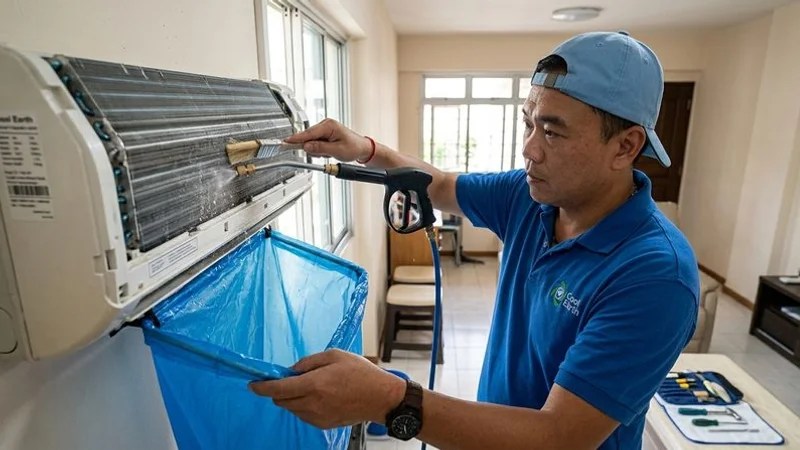
You already know that surviving a typical 32°C afternoon in Singapore requires a reliable cooling system. High humidity forces most households to run their units daily, making efficiency a top priority.
We often see homeowners struggle to find the right balance between staying comfortable and keeping electricity bills manageable. Many people wait until their unit starts blowing warm air before calling for help. That reactive approach always costs more in the long run.
How often should you service your aircon in Singapore?
Our team at Cool Earth Aircon Services has seen the costly results of neglected aircon servicing in Singapore since our founding in 2007, back when Brian completed his technical apprenticeship. Waiting until a unit blows warm air is the single biggest mistake you can make.
Let us look at the data, what it actually tells us about system efficiency, and then walk through the exact maintenance schedule your household needs.
The General Rule: Every 3 Months
For the vast majority of Singapore households, the recommended maintenance interval is once every 3 months. This quarterly schedule applies perfectly to the standard wall-mounted split units found in most HDB flats and condominiums. The tropical climate forces your compressor to work significantly harder than units in temperate countries.
High humidity levels create excessive moisture inside the indoor blower, which forms the perfect breeding ground for mould, bacteria, and algae. We highly recommend sticking to this quarterly routine because basic servicing typically costs just SGD 30 to SGD 50 per unit in Singapore. Paying this small preventative fee stops dust from accumulating on the evaporator coils and blocking airflow.
A standard quarterly service should always include:
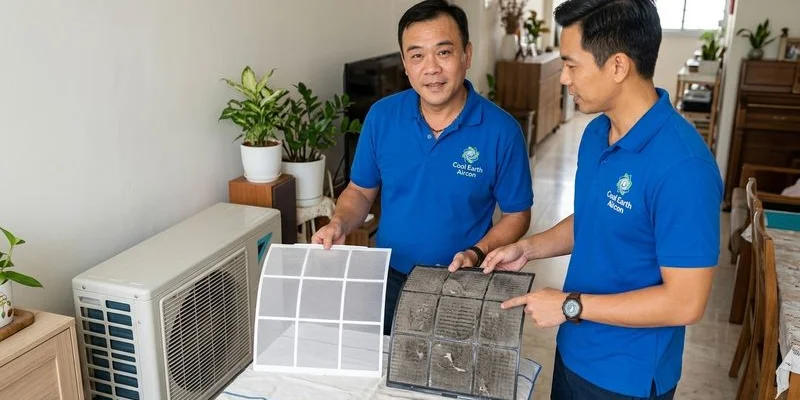
- Washing the primary air filters
- Inspecting and cleaning the evaporator coils
- Flushing the PVC condensate drain pipe to prevent leaks
- Checking refrigerant gas pressures (like R32 or R410A)
- Testing electrical connections for safety
Data from the National Environment Agency (NEA) shows that air conditioning accounts for roughly 24% of an average household’s electricity consumption. Regular maintenance keeps your system efficient, ensuring that you do not waste money forcing a clogged unit to cool your room.
Factors That Affect Servicing Frequency
Not every household is the same. Here are the key factors that may require you to adjust your routine maintenance.
Daily Usage Hours
Heavy daily usage completely changes your maintenance timeline. Running a unit for more than 12 hours a day requires servicing every 2 months instead of every 3.
We often see this accelerated schedule in homes with young children, elderly family members, or remote workers. Extended operation pulls far more airborne dust through the system, placing immense strain on the compressor.
A standard 1.5 horsepower unit consumes about 1200 watts per hour, and a dirty filter forces it to run longer to reach your desired temperature. Light-use households, operating their systems for just a few hours each evening, can easily stretch their maintenance to every 4 months.
Location and Environment
Your physical address impacts your cooling equipment more than you might expect. Units facing a busy main road or an active construction site will clog their filters rapidly from heavy particulate matter in the air.
High-floor HDB flats generally avoid the worst of this street-level pollution, staying cleaner for longer. Ground-floor apartments near parks or dense gardens will suck up organic debris and pollen at a much faster rate.
Our technicians frequently replace heavily corroded outdoor condenser coils at coastal properties in East Coast, Sentosa, and Pasir Ris. The constant exposure to salty sea air degrades metal components rapidly, making a bi-monthly inspection schedule crucial for these specific locations.
Number of Units
Owning multiple cooling units makes synchronized maintenance a smart financial decision. A standard 4-room HDB flat usually operates three to four separate indoor blowers.
We always suggest booking a single appointment for the entire house. Most service providers offer bundle pricing, dropping the total cost to around SGD 75 to SGD 100 for three units, compared to paying individual rates. Grouping your service dates saves you money and eliminates the hassle of tracking multiple maintenance timelines.
Pets in the Home
Sharing your home with dogs or cats introduces a massive amount of dander into your indoor air. Pet owners must adopt a strict 2-month servicing cycle to maintain healthy airflow.
We regularly pull thick mats of pet fur out of evaporator coils that were cleaned just six weeks prior. This dense layer of hair suffocates the blower wheel, forces the system to consume more electricity, and drastically shortens the lifespan of popular brands like Daikin or Mitsubishi.
What Happens If You Skip Servicing?
Ignoring your quarterly maintenance creates a domino effect of expensive mechanical failures. The initial symptoms might seem minor, but they quickly escalate into major repair bills.
Here is exactly what happens when you delay your servicing appointments:
- Reduced cooling efficiency: Dust coats the delicate evaporator fins, preventing the system from absorbing heat effectively. You will feel the space taking much longer to cool down.
- Higher electricity bills: A neglected system easily consumes 20% to 30% more power than a clean one, pushing your monthly utilities skyward.
- Water leaking: High humidity in Singapore causes a thick algae “jelly” to form inside the PVC condensate drain pipe. This blockage causes water to overflow directly from the drip tray onto your floor.
- Health concerns: Dust mites and harmful bacteria multiply inside the damp plastic casing. The blower then scatters these allergens across your bedroom, triggering asthma and morning coughs.
We constantly respond to emergency calls for water damage that could have easily been prevented. Protecting your property requires nothing more than a simple cleaning schedule.
Servicing vs Chemical Wash vs Chemical Overhaul
Choosing the right type of maintenance requires understanding the exact condition of your equipment. Each service tier targets a different level of contamination.
We break down the three primary maintenance categories below to help you make an informed choice.
| Service Type | Estimated Cost (Singapore) | What It Includes |
|---|---|---|
| Regular Servicing | SGD 30 to SGD 50 per unit | Basic filter washing, light coil brushing, and drain flushing. Best for routine 3-month upkeep. |
| Chemical Wash | SGD 80 to SGD 150 per unit | Applies targeted chemical solutions to the coils to dissolve stubborn mould. Best done annually. |
| Chemical Overhaul | SGD 150 to SGD 350 per unit | Full dismantling of the unit for deep chemical soaking. Required for severe blockages or weak airflow. |
Routine upkeep simply maintains the status quo and clears out superficial dust. A chemical wash acts as a deep clean, dissolving the sticky grime that water alone cannot remove.
Our senior technicians perform a chemical overhaul when a unit has not been touched in years. This intensive process restores older equipment by completely clearing the drainage system and blower wheel, often accompanied by a necessary R32 or R410A refrigerant gas top-up.
Our Recommended Schedule for Singapore Homes
Finding the perfect balance between cost and performance requires a personalized approach.
We developed this straightforward timeline based on decades of field data.
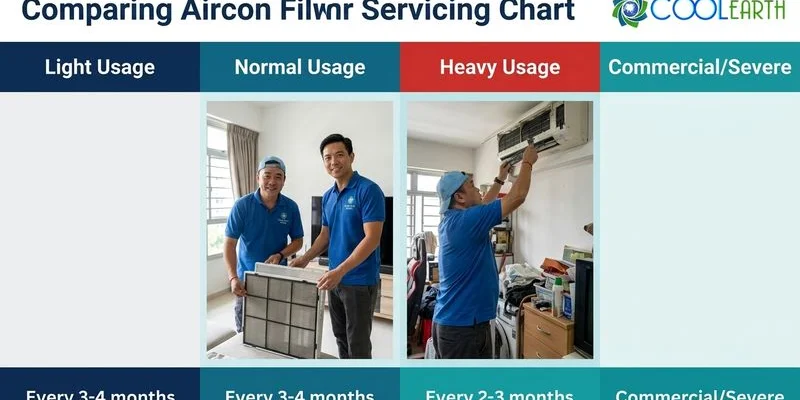
- Light use (under 6 hours/day): Schedule a visit every 3 to 4 months.
- Moderate use (6 to 12 hours/day): Book an appointment strictly every 3 months.
- Heavy use (over 12 hours/day): Require attention every 2 months.
- Deep Chemical Wash: Perform this once every calendar year.
- Full Chemical Overhaul: Reserve this for every 2 to 3 years, or when airflow drops noticeably.
Many homeowners find it difficult to track these dates manually. Securing an annual agreement ensures your visits happen on time and protects your warranty status. This proactive approach saves you a substantial amount of money, a topic covered extensively in our breakdown of annual contracts vs ad-hoc servicing.
Quick Tips Between Services
You hold the power to improve your system’s efficiency between professional visits. Implementing a few simple habits makes a massive difference in your monthly energy consumption.
The National Environment Agency recently launched the “Go 25” movement, urging residents to set temperatures to 25°C or higher. Every single degree you raise the thermostat reduces your cooling energy consumption by up to 12%, while still keeping the room perfectly comfortable.
We highly suggest taking a few minutes every fortnight to perform basic upkeep.
- Rinse your primary filters with plain tap water and dry them completely.
- Clear the outdoor condenser space, leaving at least 30cm of breathing room.
- Set the remote to 25°C to ease the workload on the compressor.
- Activate the sleep timer so the machine turns off after the room cools down.
- Watch for early condensation around the plastic casing to catch pipe clogs early.
Maintaining a clean cooling system directly impacts your wallet and your daily comfort. How often should you service your aircon in Singapore?
Quarterly visits remain the gold standard for protecting your investment.
We know that life gets busy and routine maintenance easily slips your mind. Catching a small drainage clog today prevents a ruined mattress and a massive repair bill tomorrow.
If your system is blowing warm air or dropping water, get in touch with our team right away. Let us restore your system to peak efficiency with transparent pricing and fast, reliable service.

About the Author
Brian
Founder & Lead Technician
Brian founded Cool Earth Aircon in 2007 after completing his technical apprenticeship. With 18 years of hands-on experience servicing aircon systems across Singapore, he leads a team of certified technicians committed to transparent, quality work.